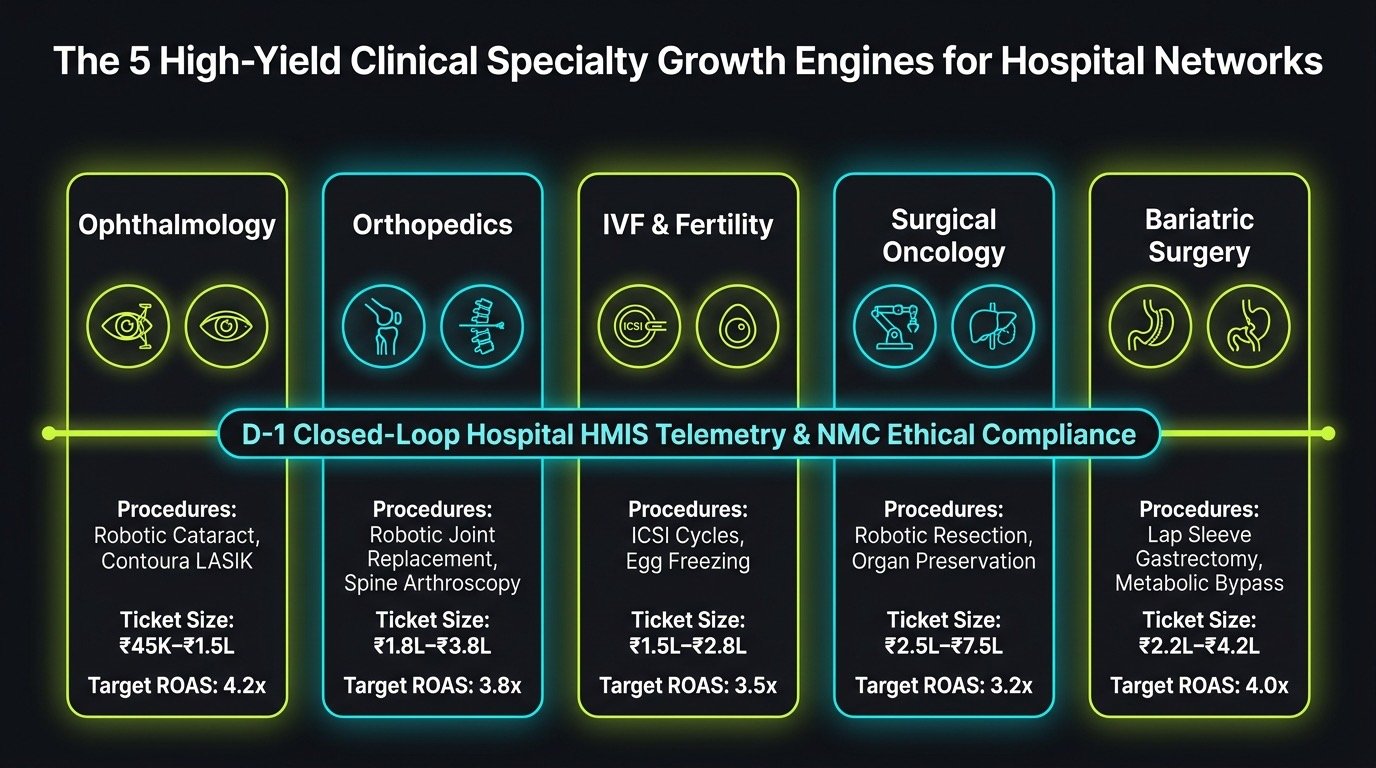
Last year, an eye and fertility network in North India generated 2,800 monthly digital inquiries. Exactly 78% never set foot in an OPD consultation. We audited their patient logs. Their agency treated terrified patients like shoppers buying sneakers. That's unacceptable.
Healthcare isn't a commodity purchase. It never has been. When someone faces failing eyesight or years of unexplained infertility, they aren't hunting for discount promo codes. They're terrified. They fear surgical complications, clinical failure, and sudden hospital bills. Yet most digital marketing agencies run generic ecommerce playbooks on critical surgeries. They slap stock photos of grinning models in white coats on Facebook ads. They make wild promises about painless recoveries. Then they flood hospital telephone desks with junk inquiries that evaporate the moment someone mentions consultation fees. It's a total disaster. We've seen this mess firsthand.
Strategic Insights for Medical Directors & Promoters
- Generic digital marketing collapses in tertiary healthcare because patients don't buy agency slogans. They look for genuine consultant authority and procedural safety before picking up the phone. Don't waste budget on generic hype.
- High-margin surgical practices need direct procedural video explainers featuring real operating surgeons who explain techniques, safety margins, and clinical risks candidly. That's what builds trust. It's what patients want.
- Replacing generic telephone operators with clinically trained paramedical counselors increases attended OPD consultation show rates by over 40%. We've audited this across multiple hospital centers. The difference is night and day.
- Niche clinical positioning in sub-specialties drives 3x higher surgical admissions when measured by CPQL (Cost Per Qualified Lead = Physical Attended OPD Walk-in) and reconciled across a 6-month forward cohort window rather than superficial CPL. That's how we scale hospital revenue.
The Collapse of Generic Medical Advertising
Standard marketing agencies follow an exhausting formula. They launch high-volume search ads and generic social media banners showing staged stock photos of doctors with stethoscopes. They bid heavily on broad search terms like best doctor near me or eye hospital nearby. These campaigns generate plenty of web traffic and cheap form submissions. But their actual yield for surgical operation theatres is shockingly close to zero. We've inspected the data. The leads just don't convert.
Patients aren't fools. They've built complete immunity to generic promotional claims. Before booking an appointment with an eye surgeon or fertility specialist, prospective patients look for three concrete proofs. First, they examine surgeon credentials, including verified procedural volumes, board certifications, and super-specialty training. Second, they inspect operating technology like femtosecond laser platforms or cleanroom embryology standards. Third, they look for authentic clinical explanations from doctors who actually perform the procedures. They won't settle for less.
When an agency doesn't communicate these clinical differentiators, your hospital gets forced into price wars. You end up offering discounted health checks. That's a race to the bottom. Competing on price destroys surgical margins, attracts transient patients who don't care about quality, and infuriates senior surgeons who refuse to be marketed like retail commodities. We won't let our partner hospitals walk into that trap. It's bad economics.
"Top surgical specialists don't need more raw volume. They need pre-educated patients who understand their treatment options, respect clinical protocols, and are financially prepared for elective surgical intervention. An agency that delivers raw volume without clinical qualification destroys doctor productivity and burns out hospital staff. We refuse to operate that way. It's a disservice to medicine."
Engineering Clinical Authority across Three Core Specialties
Effective healthcare marketing requires deep clinical literacy. The patient journey in elective eye care is completely different from the multi-year emotional struggle of assisted reproductive technology or the chronic pain of joint replacement. You can't use one generic template. We've built custom clinical funnels for each.
1. Ophthalmology and Refractive Surgery
In eye care, patient acquisition hinges on eliminating fear of surgical complications. A patient considering SMILE, Contoura Vision, or robotic cataract surgery is terrified of losing their vision. That's real fear. An elite eye hospital marketing agency doesn't push cheap eye test coupons. We don't believe in gimmicks. Instead, we produce detailed procedural video essays where chief surgeons walk through corneal flap mechanics, micro-incision energy distribution, and recovery milestones. When patients see your surgical precision on video, their hesitation vanishes. They arrive at the OPD pre-sold on clinical safety. It's that effective.
2. Fertility and Assisted Reproductive Technology
In reproductive medicine, patients often arrive after years of heartbreak and failed cycles at other clinics. A dedicated IVF clinic marketing agency must design patient acquisition funnels centered on medical transparency, embryological rigor, and compassionate guidance. Don't run ads promising fake 90% success rates. Patients know better. They're skeptical. Successful IVF centers explain blastocyst culture viability, pre-implantation genetic testing protocols, and personalized hormonal stimulation plans. Patients pick fertility centers that demonstrate medical honesty over aggressive sales hype. That's what wins trust.
3. Orthopedics and Joint Replacement
For knee, hip, and spine conditions, patients endure months of conservative therapy, painkillers, and physical therapy before considering surgery. Your marketing must address post-operative mobility, pain management protocols, and rehabilitation milestones. Highlighting robotic arm assistance and rapid-recovery protocols establishes your hospital as the premier destination for complex joint reconstructions. That's how you capture high-margin surgical cases. We've proven this in practice.
Doctor-Led Procedural Video Authority
Produce high-resolution clinical video essays where senior consultants explain surgical mechanics, patient selection criteria, and realistic recovery milestones, establishing profound clinical trust before the first phone call so patients don't hesitate.
Paramedical Tele-Triage Screening
Direct all digital inquiries to clinically literate counselors who evaluate patient symptoms, review existing diagnostic scans, explain treatment phases, and schedule consultations with the appropriate sub-specialist so unqualified leads don't choke the schedule.
In-Clinic Pathway and Surgical Conversion
Ensure disciplined operational continuity between digital appointment confirmation, OPD physical reception, diagnostic workup, and surgical financial counseling, optimizing daily CPQL while monitoring surgical conversion across the 6-month forward cohort window so you aren't guessing.
Why Paramedical Tele-Triage Outperforms Traditional Call Centers
The highest-return operational upgrade a hospital can make isn't spending more on Google Ads. It's retraining the telephone triage desk. In traditional setups, incoming calls land with low-paid call center reps who read rigid scripts. When a patient asks about surgical risks or anesthesia safety, untrained operators have zero answers. They freeze up. It's painful to listen to.
When we partner with hospitals, we deploy paramedical triage protocols. These counselors have backgrounds in nursing, hospital administration, or allied health sciences. When an inquiry comes in, they conduct a structured clinical intake. They know what to ask. They don't waste time.
They ask about symptom duration, review prior scans over WhatsApp, and check for relevant comorbidities. They walk the patient through diagnostic workups needed during the OPD visit and clarify health insurance pre-authorization protocols. When the patient finally sits down with the chief surgeon, they're calm, informed, and mentally ready for procedural guidance. Doctor consultation time is respected, and outpatient-to-inpatient conversion rates often double. We've verified this across hundreds of clinical shifts. Look at the numbers.
Clinician Authority
Positioning individual doctors as premier sub-specialty authorities drives 3.2 times higher appointment intent than anonymous hospital branding. Patients trust surgeons, not logos.
Procedural Clarity
Short clinical video explainers demystify surgical techniques, reducing patient anxiety and dramatically lowering consultation no-show rates so your OPD doesn't sit empty.
Paramedical Intake
Qualified healthcare triage desks screen clinical suitability, ensuring senior consultants spend clinical hours with viable surgical candidates who need care.
Insurance Guidance
Proactive cash-free and TPA pre-authorization counseling during triage prevents financial abandonment at the point of surgical scheduling so patients don't drop off.
Ethical Growth Within Regulatory Safeguards
Marketing medical practices in India requires strict adherence to statutory ethics. You can't cut corners. National Medical Commission guidelines prohibit paying kickbacks for patient referrals, making exaggerated promotional claims, or using misleading before-and-after visual edits. Don't compromise institutional integrity. It isn't worth the risk.
An enterprise hospital digital marketing agency must enforce rigorous compliance review gates before any asset goes live. Surgical volume numbers must match hospital billing records. Patient case reviews must include explicit written consent and explain real clinical recoveries without promising guaranteed therapeutic results for everyone. We won't compromise on patient privacy.
Protecting institutional reputation is our primary fiduciary duty. A careless campaign that violates medical regulations can wipe out decades of physician reputation, invite government scrutiny, and jeopardize hospital accreditations. Long-term enterprise value comes from dignified, educational, and clinically rigorous public communication. That's the only sustainable way to build a healthcare brand. We stand behind that principle.
NMC & DISA MEDICAL ETHICS SAFEGUARD
All digital outreach must conform to Chapter 7 of the Indian Medical Council Professional Conduct, Etiquette and Ethics Regulations. Patient identification details, diagnostic imagery, and procedural video must be scrubbed of personal identifiers in accordance with the Digital Personal Data Protection Act, 2023. We audit every creative against these standards before launch.
Frequently Asked Boardroom Questions
Why do our senior surgeons resist digital marketing campaigns?
Senior clinicians push back when agencies run low-quality ads that make them look like salesmen. When marketing focuses on clinical education, peer-reviewed procedural achievements, and genuine medical authority, surgeons become enthusiastic partners in content creation. We've proven this across multiple hospital departments. They love discussing their craft.
How does specialty marketing differ from general hospital branding?
General branding focuses on hospital size, bed capacity, and department lists. Specialty marketing zeroes in on specific clinical conditions, diagnostic pathways, and surgical techniques, addressing the acute concerns of patients who need immediate procedural care. It's much more targeted.
What video content format generates the highest patient conversion?
Direct-to-camera consultant explanations answering specific patient dilemmas perform best. Topics like What happens during laser eye surgery or When should an IVF patient consider donor eggs build immediate credibility when presented plainly by the operating physician. It's authentic medical guidance.
Can our hospital market super-specialty surgeries on social media ethically?
Yes, provided the content remains educational, objective, and truthful. Explaining medical conditions, available surgical methodologies, and recovery guidelines fulfills public health education mandates while naturally highlighting your hospital's clinical expertise. We keep it aligned.
How should we evaluate an agency claiming expertise in healthcare marketing?
Ask them to map out the clinical pathway of your primary procedural revenue engine. If their team doesn't understand the difference between OPD registration, diagnostic conversion, and surgical admission, they'll treat your hospital like an online shoe store. We suggest disqualifying them immediately. Don't compromise your standards.
Interrogate Your Hospital's OPD-to-IPD Revenue Leakage
Growingo has no sales reps or account executives. Every 45-minute clinical diagnosis session is conducted directly by Ashish Jha, Founder, and senior healthcare growth strategists who analyze hospital P&L economics, HMIS attribution, and surgical leakage.